Designing with White Pebbles: Bright Borders and Landscaping Ideas

Why design with white pebbles
White pebbles are a simple way to brighten outdoor space, frame lawn and garden beds, and bring structure to your landscaping project. They reflect light into darker corners, sharpen garden edges, and create a clean base around plants, paths, flower beds, and outdoor features. Whether used in narrow garden borders or larger feature areas, they offer a modern appearance and low-maintenance finish that works across different garden styles, from coastal and contemporary designs to rustic garden styles.
In this guide, you will learn how to choose the right size and finish, explore layout ideas for borders and feature areas, follow simple installation steps, pair colours for a cohesive palette, and maintain your space while avoiding common pitfalls so results stay crisp and low maintenance.
Choosing the right size and finish
The size and finish of your pebbles influence both appearance and performance. Smaller stones, typically 10 to 20 mm, create a smoother, more refined surface suited to garden edging, pathways, flower beds, and pot toppers.
Larger sizes, around 20 to 40 mm, introduce texture and work well across wider bands, garden beds, or feature fields. Tumbled, rounded finishes are perfect for barefoot areas and pool surrounds, offering comfort underfoot, while more natural textures create a softer, organic look. For consistent coverage and colour, aim for a depth of 40 to 60 mm, which helps prevent patchiness and supports long-term stability.
If you are choosing the right garden edging to pair with white pebbles, consider the surrounding materials. Metal edging, rubber edging, and composite edging can all help define the pebble area and keep the layout tidy.

Layout ideas beyond borders
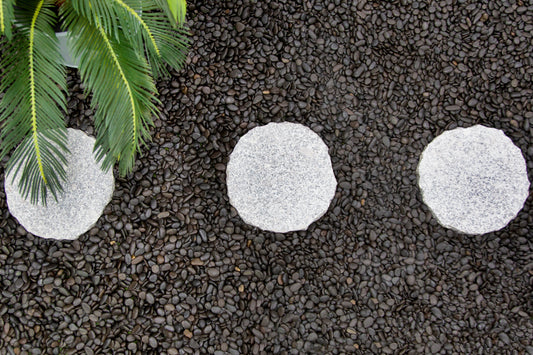
White garden pebbles and decorative pebbles can be used in more than simple edging. Make courtyard spaces pop by using full pebble fields broken up with stepping pads, maintaining access while keeping a clean, open feel.
Meandering dry creek lines can double as drainage solutions while adding movement through the landscape. A smart use of contrasting pebble bands creates effective zoning for dining and lounge areas without the need for built structures. In smaller spaces, compact focal point islands under benches or grouped pots create character without crowding the layout.
White pebbles also work well beside grass runners, around garden beds, along straight lines, or through smooth curves depending on the look you want. For clean lines and a modern appearance, pair pebbles with metal edging or steel edging. For softer or rustic garden styles, use stone edging or natural garden borders. In areas exposed to coastal salt air, choose durable garden edging materials that can handle the conditions.
To avoid glare, balance bright white finishes with greenery, shade, darker materials, or warm-toned features.
Installation basics – neat, durable results
- Mark out the area and excavate to allow for base, weedmat, and final depth.
- Compact the surface where required to create a stable foundation.
- Lay quality weedmat with 100 to 150 mm overlaps to reduce weed growth.
- Install edging first to contain the pebble field and help maintain clean lines.
- Choose garden edging materials suited to your style, such as steel garden edging, corten steel, metal edging, or stone edging.
- Pour pebbles evenly, then rake and level to the target depth.
- Use straight lines for a formal look or smooth curves for a softer garden style.
- Lightly hose the surface to remove dust and reveal the true colour.
Installing garden edging before adding pebbles is one of the best garden bed edging steps you can take, as it helps stop stones from spilling into lawns, paths, or nearby garden beds.

Maintenance and long-term care
Maintaining white pebbles can be achieved through a simple routine. Blowing or brushing away leaves and debris regularly helps to keep the surface clean. Rinsing occasionally will restore brightness, and topping up lightly after initial settlement may be needed over time.
Spot clean marks such as tannins or pet stains as needed, and re-level sections in high traffic areas that shift to maintain an even, consistent finish. Check garden edging occasionally as well, especially near lawn and garden beds, to make sure borders remain firm and the pebbles stay contained.
Quick coverage guide
To estimate how much material you need, calculate the area and multiply by your chosen depth. A layer of 40 to 60 mm provides a good balance of stability and colour uniformity. Using consistent bag sizes and keeping a spare bag on hand makes future top-ups easier.
You can simplify your calculations using a pebbles calculator to plan with confidence.
Brighten your space with a simple weekend project
Start by sketching your outdoor space and choosing one pebble size to keep the look consistent. Add proper edging and weedmat, pour to the recommended depth, and finish with stepping pads or statement pieces such as pots or planters.
Whether you are refreshing flower beds, defining garden borders, improving lawn and garden beds, or installing garden edging as part of a larger landscaping project, white pebbles can help create clean lines, smooth curves, and a bright modern appearance. With a clear plan and the right materials, you can create a clean, modern outdoor space in a single weekend.